The MIC Effect: a two-minute AI film with two actors who talk
A short drama for My Investing Club. Marco loses the savings he shares with Lena, lies about it, and fixes his trading, and then his marriage, by turning up to the 9:30 live session every morning. Every person and room is AI. The trading session and Alex's ad are real club footage.
- LENGTH
- 1 minute 56, 16:9 with a 4:5 cut, plus a 40-second cutdown in 16:9, 4:5 and 9:16, all with subtitles
- CLIENT
- My Investing Club
- CAST
- Marco and Lena, two AI actors with locked faces and voices
- TOOLS
- Nano Banana Pro and Seedream for sheets and sets, Seedance 2.5 for video, Eleven v4 for voices, ElevenLabs Music, Whisper for subtitles, the edit built in Python and ffmpeg
- VERSIONS
- Six rough cuts, two finished masters, then the 40-second cutdown
The third draft starts at the worst moment
The first two drafts were flat. They opened slowly, on someone leaving for work, and the story moved in a straight line from bad to good with nobody in conflict. An ad has about two seconds to stop the scroll, so the third draft starts at the worst moment instead.
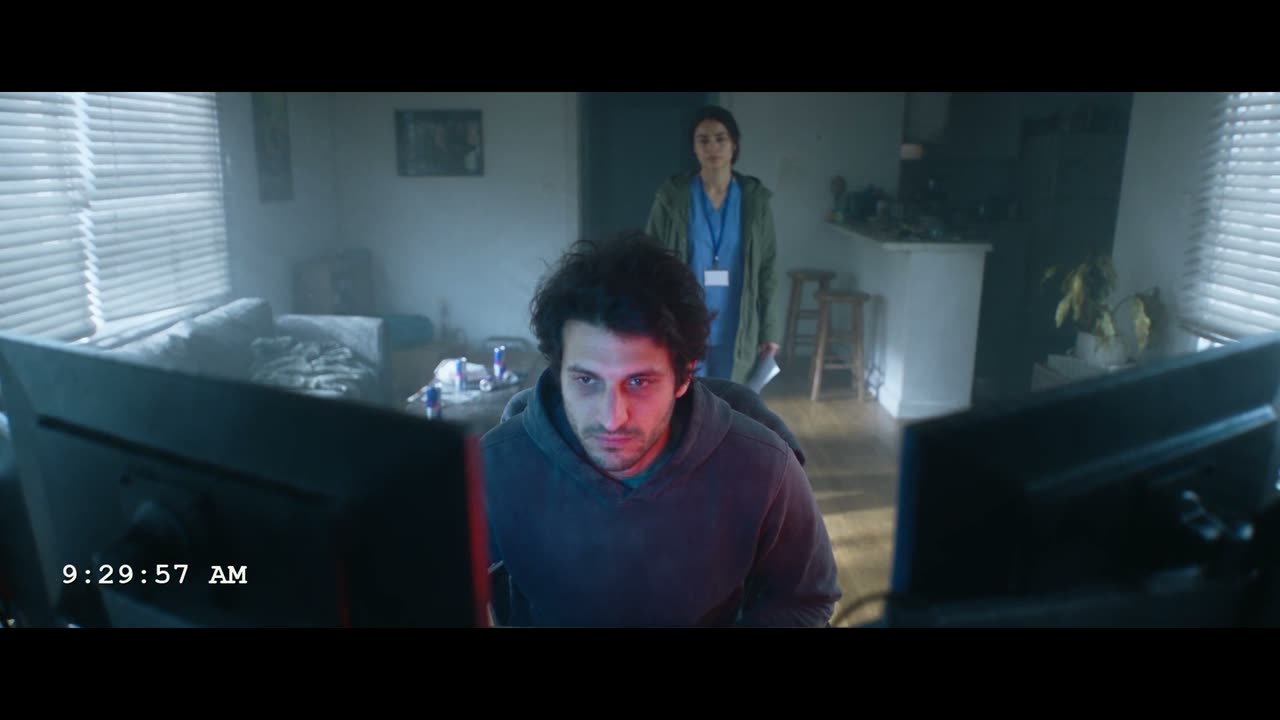
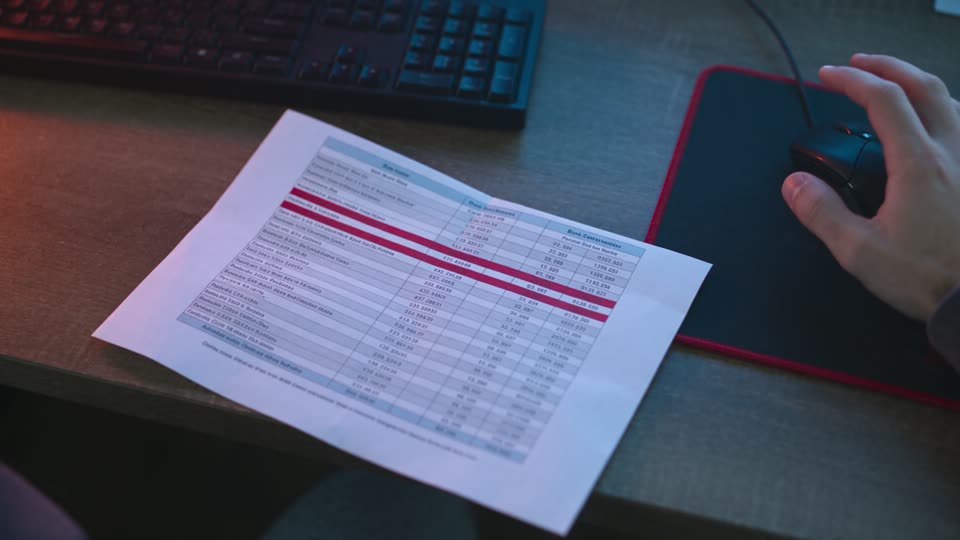
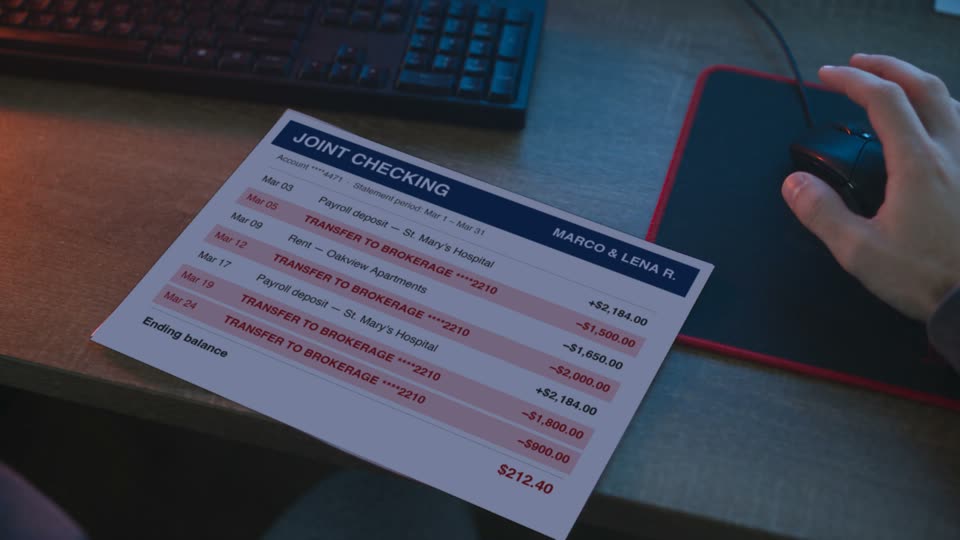
It is 9:29:57. Marco's finger shakes over the mouse, and Lena is standing in the doorway in her scrubs holding a bank statement: "How much did you lose, Marco?" The frame freezes, the colour drains, and Marco says to the camera: "Yeah, that's me. Let me back up."
That question stays open for over a minute and a half. The fight is about the lie, not the money. The fix is a habit, not a win. And the last scene puts the camera back exactly where the first scene had it, so the answer lands in the same shot that asked it.
Cold, then warm, in the same rooms
The film has four acts, and each one has its own look:
- The hook and the spiral. The freeze, a rewind to eight months earlier, then a fast run of bad mornings and late nights: late for the open, a new system every week, taking money from the joint account. Cold, blue-grey and handheld.
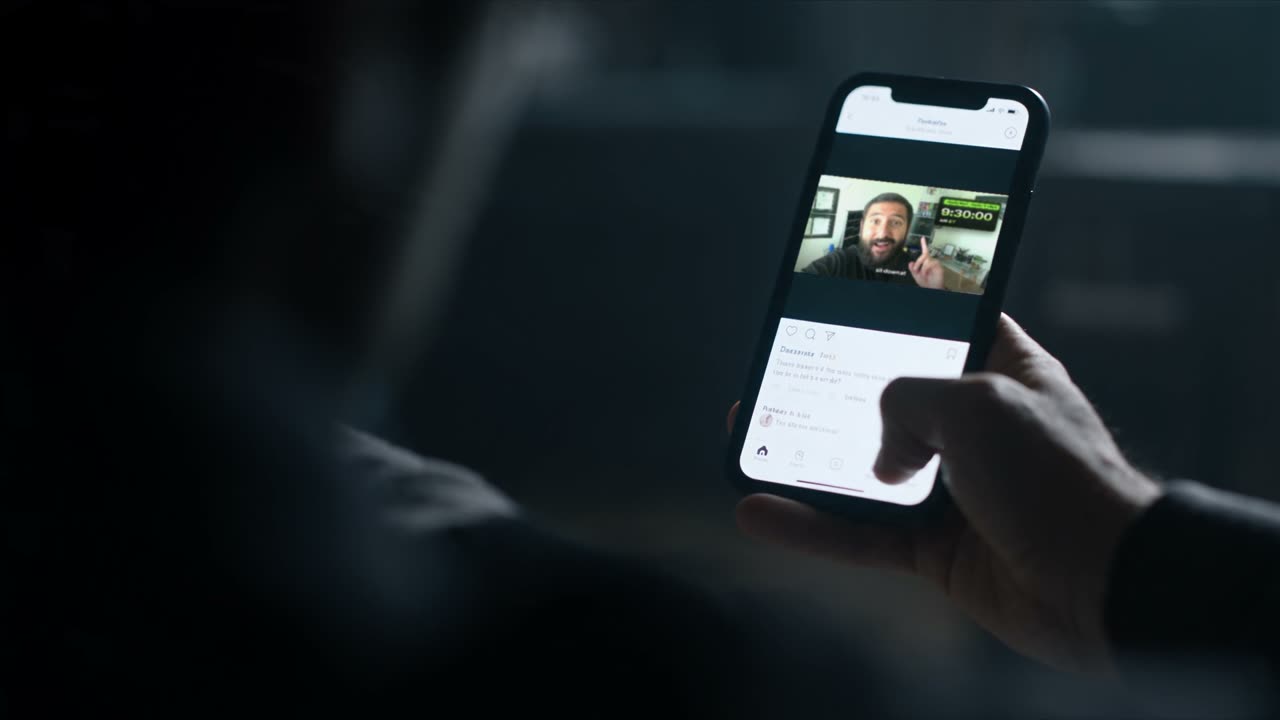
- The fight. In the kitchen. "I'm not mad that you lost it. I'm mad you lied." She leaves for her shift, and that night he ends up on the floor with his phone, where Alex's ad stops his thumb.
- The switch. 9:29 the next morning. He joins the live session, the blinds turn, and warm light comes into the room. After that there are day cards, a gym, a notebook and a calm trade.
- The mirror. 9:29:57 again, in the same framing, now in gold light. This time he takes his hand off the mouse and waits.
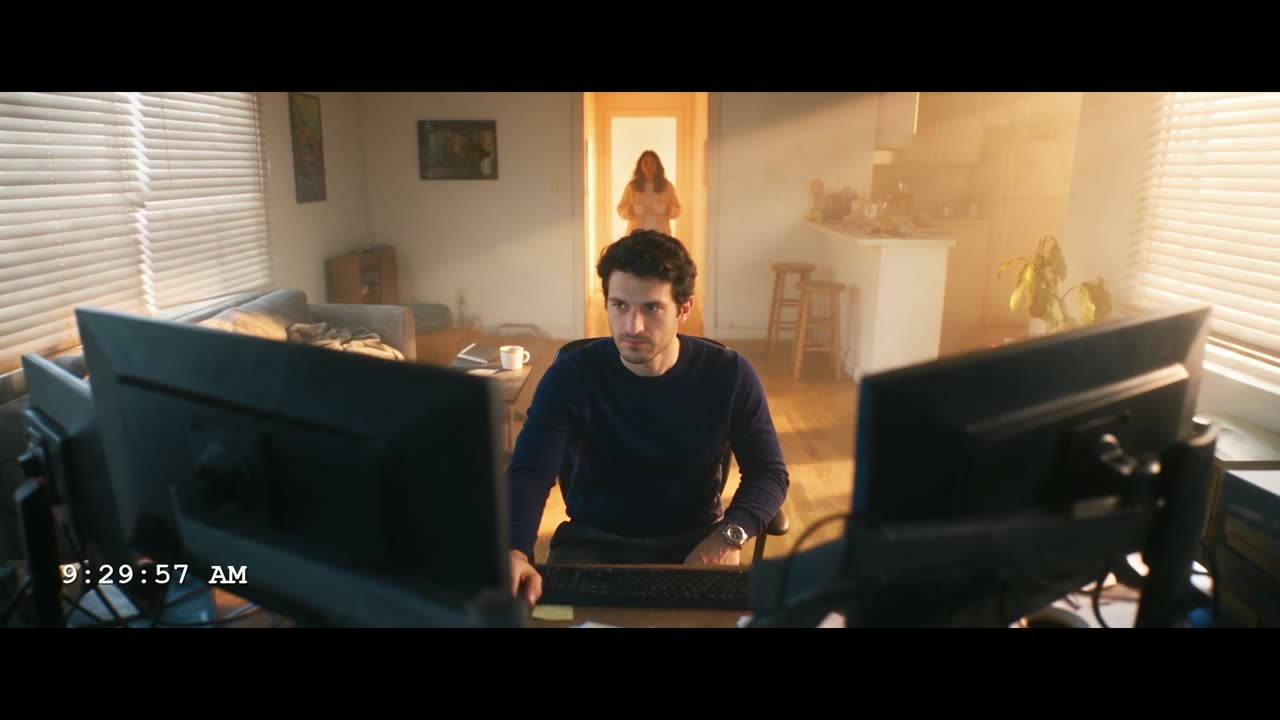
Two people, four outfits
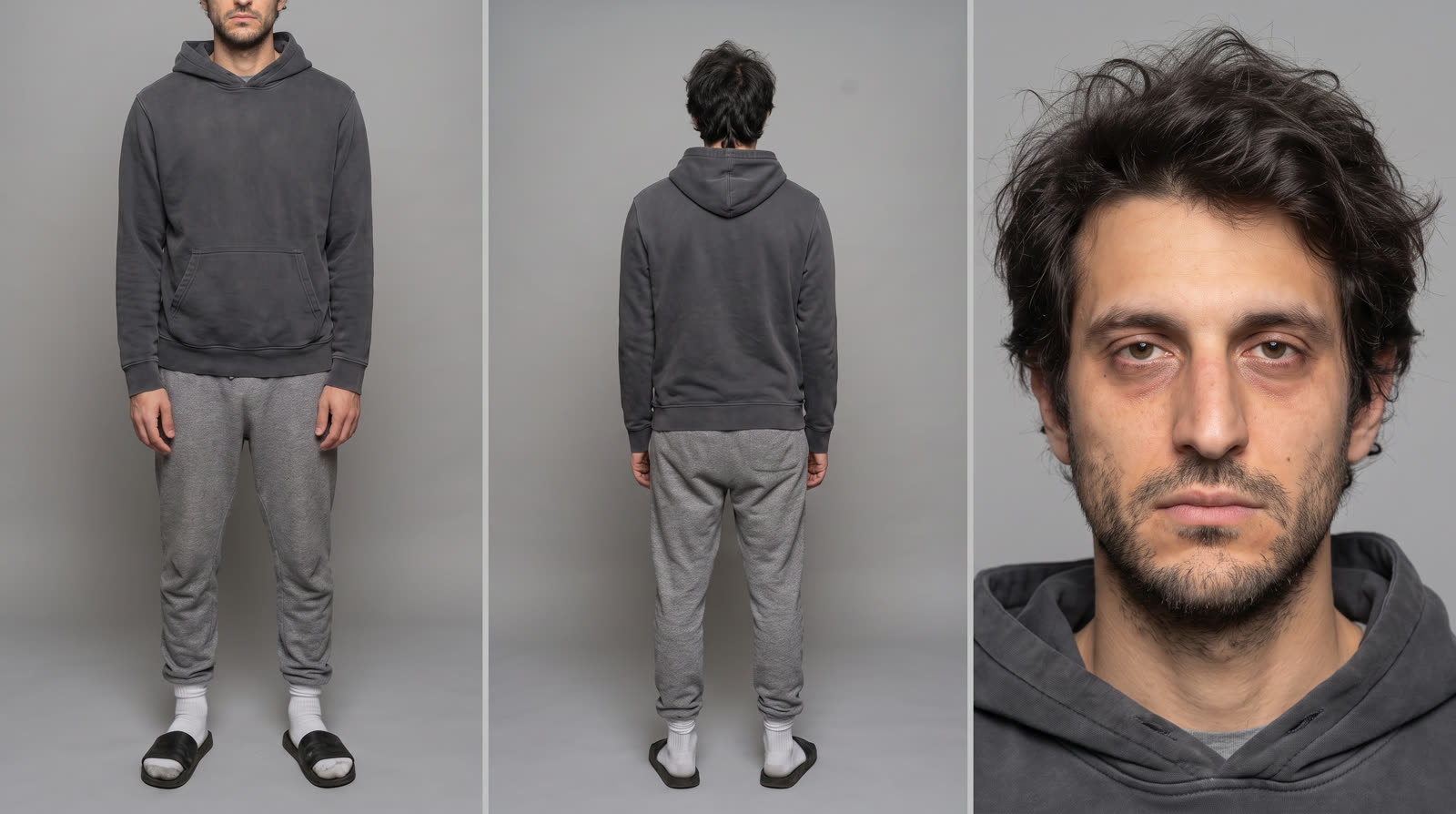
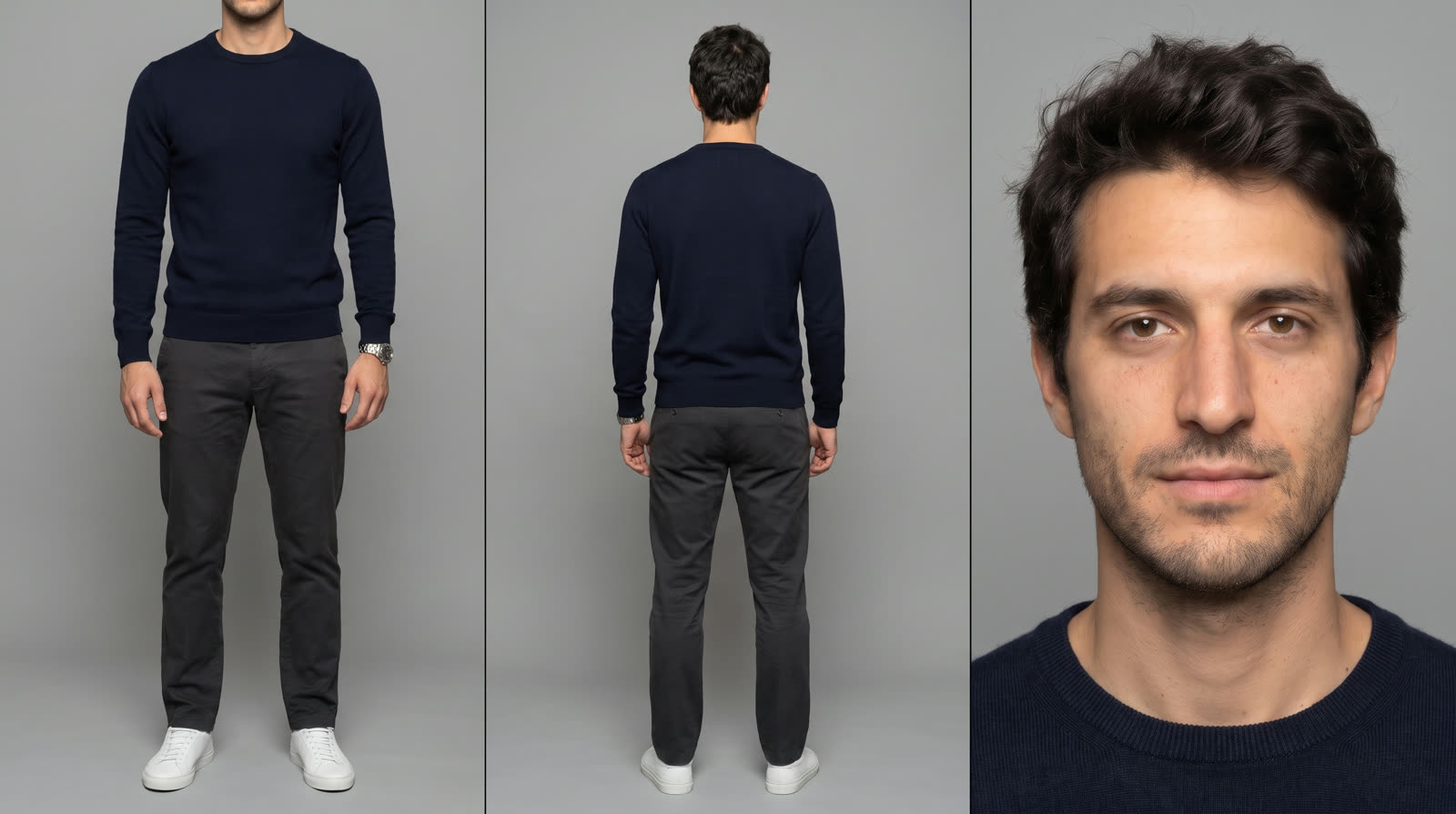
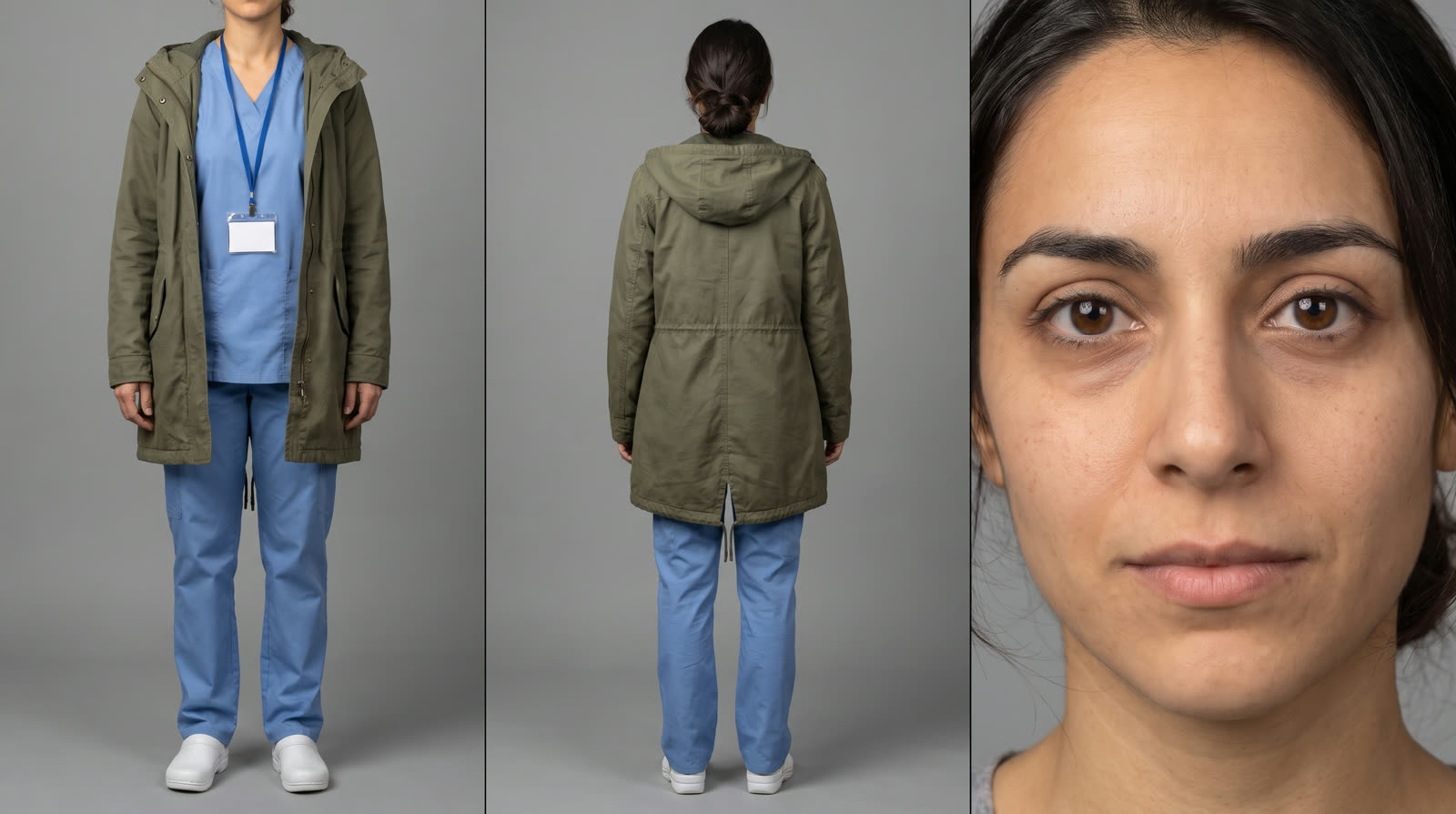
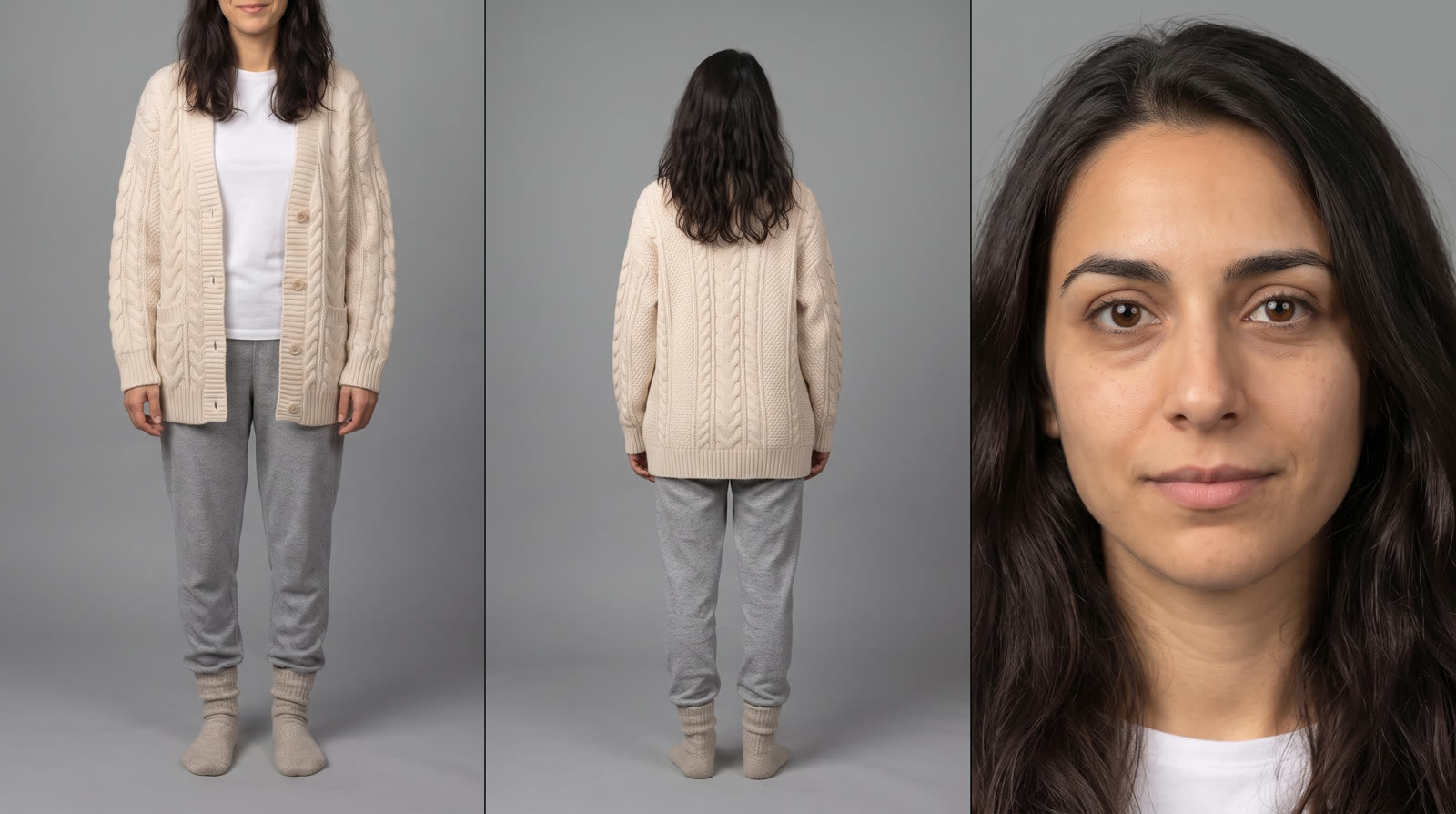
Both characters change over the film, so each one gets two character sheets. Marco before is in a grey hoodie and slides, unshaven and tired. Marco after is in a fitted navy knit with a steel watch, his hair cut and his beard trimmed. Lena wears hospital scrubs under a parka in the fight, and a cream cardigan at home in the ending.
Each of them also has one canon face portrait. Every shot gets the outfit sheet for that scene plus the canon face, so the face stays the same while the clothes change.
A voice sheet for each actor
Most of my AI ads have one person talking to the camera. This one has a real scene between two people, plus voice-over, so the voices had to stay the same from shot to shot.
I wrote one phonetic pangram per character, marked with the emotions that character goes through in the film: tired, wry, hurt, calm. I auditioned three voices for each and picked Julian for Marco and Sienna for Lena. Then I generated a voice sheet for each of them: a split-screen video with the outfit turning on one side and the face speaking the pangram on the other, perfectly in sync with the chosen voice.
Every dialogue shot uses that sheet as its video reference. Marco's voice-over lines are generated in the same voice, so the man on screen and the narrator sound like one person.
One apartment, drawn as a floor plan
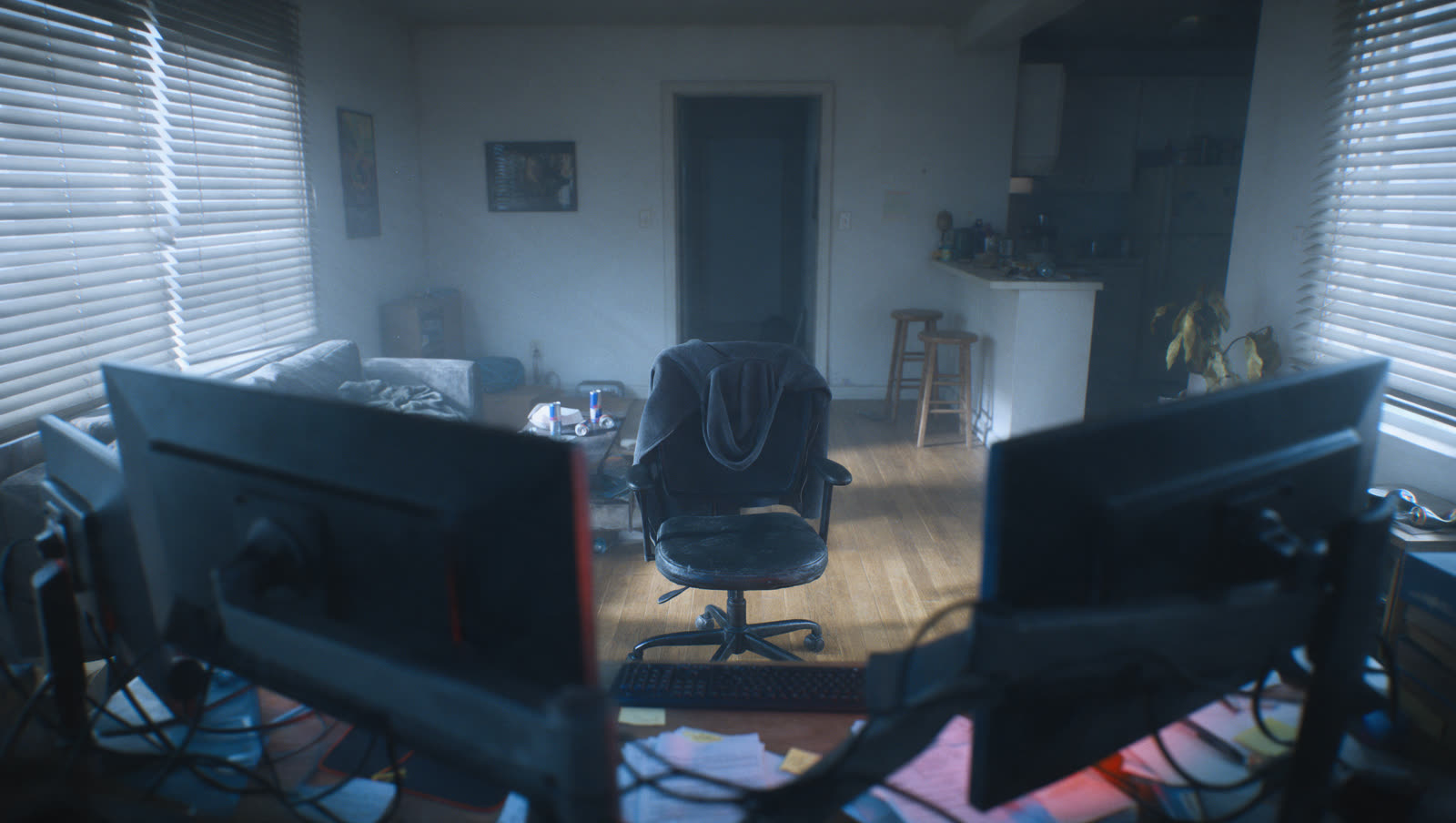
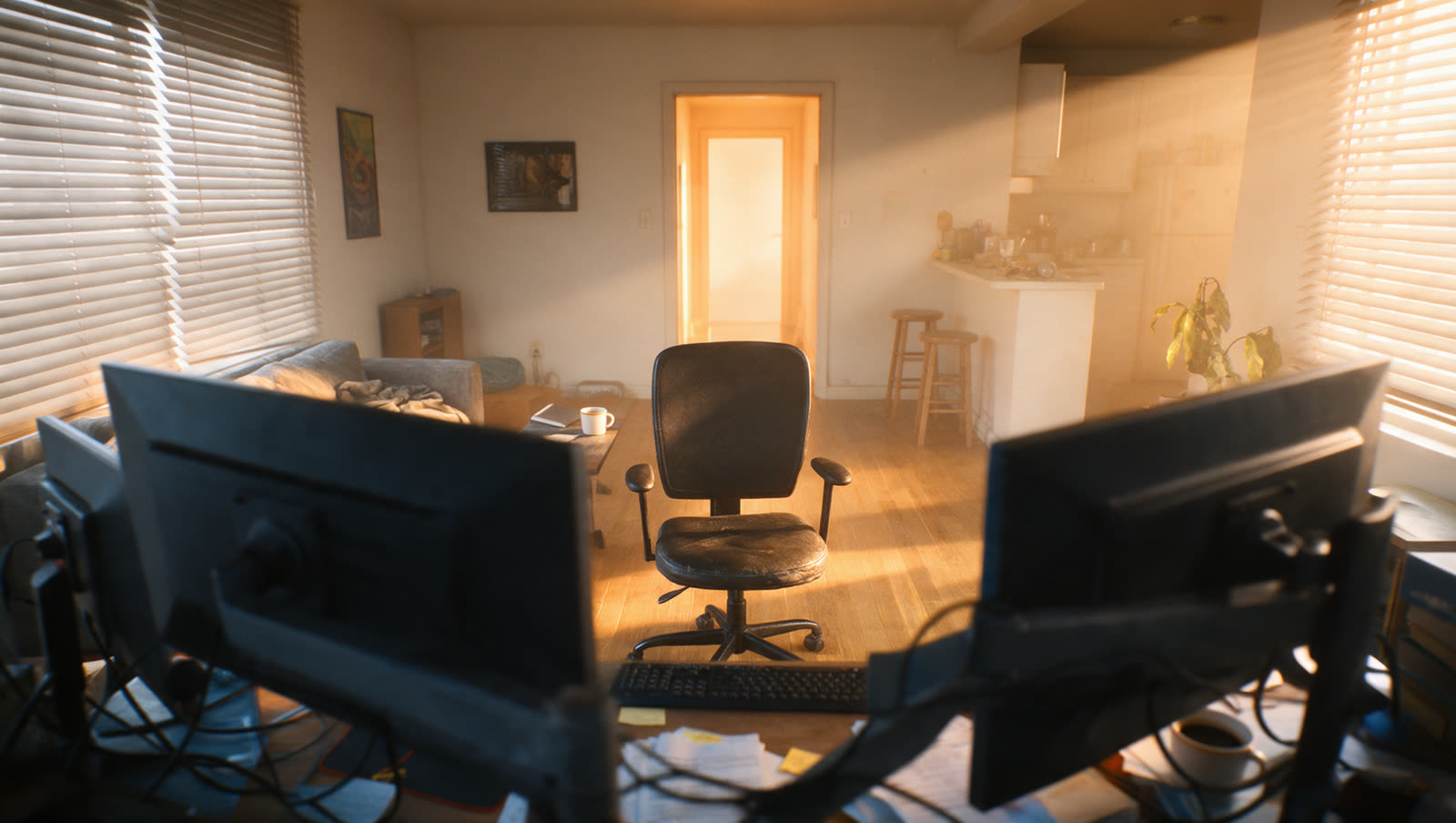
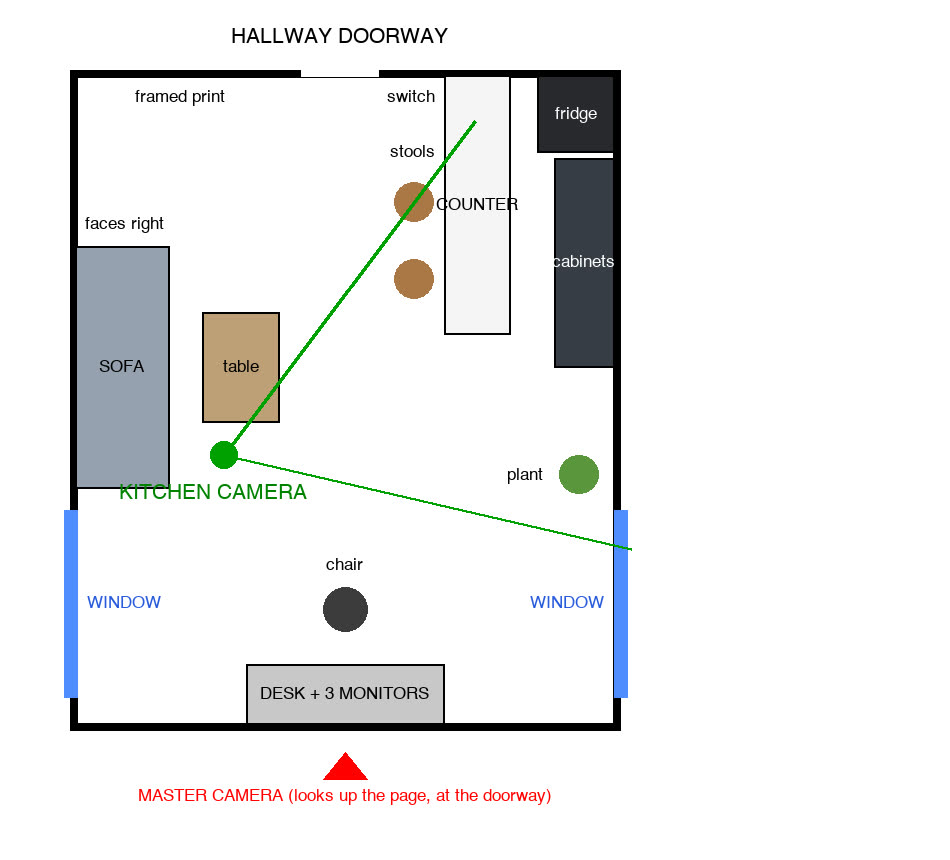
Nearly everything happens in one open-plan apartment, so I drew it as a floor plan first: the desk with three monitors, the sofa, the kitchen counter and stools, a window on each side wall, and the hallway doorway Lena stands in. The plan also marks where the main cameras stand. Every prompt describes the room from that plan, so the doorway, the counter and the windows stay where they are from shot to shot.
Each angle then has two plates, made to match each other: a cold one with the blinds shut for the first half, and a warm one with sun coming through the slats for the second half.
Ten scenes, drafted cheap and finished once
Each scene has its own written page before it is generated: which references it uses, the room geometry, the lens, the light with colour values, what happens second by second, and the exact lines. Seedance generates a scene with several cuts in one take, so a whole argument can be one generation.
Every scene is drafted at low resolution first. Drafts are where the problems show up: a monitor showing a Windows wallpaper, Lena carrying one mug instead of two, a camera that hardly moves. The prompt gets fixed, and only then is the scene rendered in full quality.
The switch took three tries. First he raised the blinds, which broke continuity with the ending, where the blinds stay down. Then he twisted the wand, but the close-up looked like pulling a light cord. The final version keeps him in his chair while the sun breaks through the blinds beside him.
The club is real, not generated
The two moments that sell the club use real footage. When Marco's thumb stops on his phone at 3 AM, the ad on the screen is Alex's actual ad, tracked onto the AI phone frame by frame and matched for brightness and focus, with its real audio.
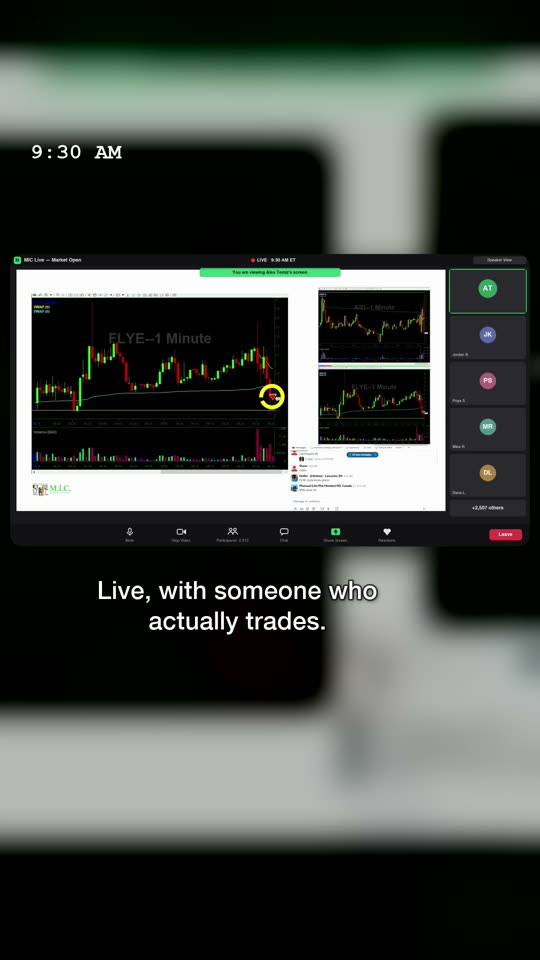
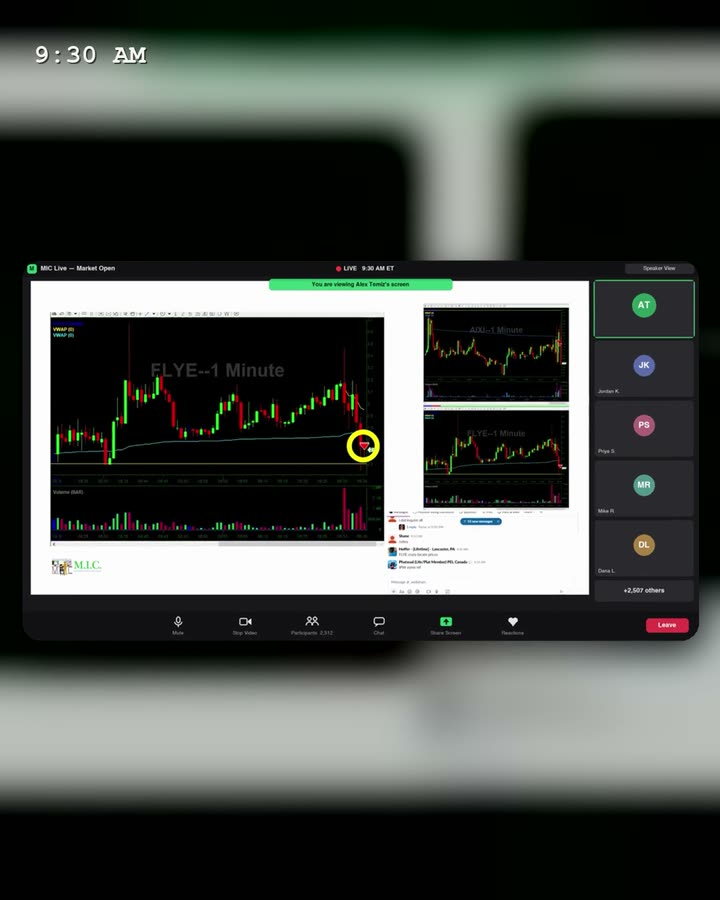
The live session is a real recording of Alex trading the open. I put it inside a plain video-call window I built for the film, with no app branding, and the other participants shown only as initials. While his own results are on screen, a line underneath says they are his own and not typical.
Six rough cuts, one fix at a time
The edit is a build script, so every round of notes means changing a few lines and rendering the whole film again. These are the notes that changed the most.
Silence at the switch
Under the spiral there is a tense music cue. A tape stop marks the freeze, and a reversed whoosh carries the rewind. At the switch everything drops away to room tone, and a single bass hit lands on the frame where the light comes in. The momentum track starts on the line "Turns out I didn't need a new strategy", and a softer cue carries the ending into the end card. Music ducks under every line of dialogue.
Three versions of the last exchange were generated, each with a different answer to "How much did you lose this week?". The final cut uses "Nothing. I'm up."
A second film for the feed
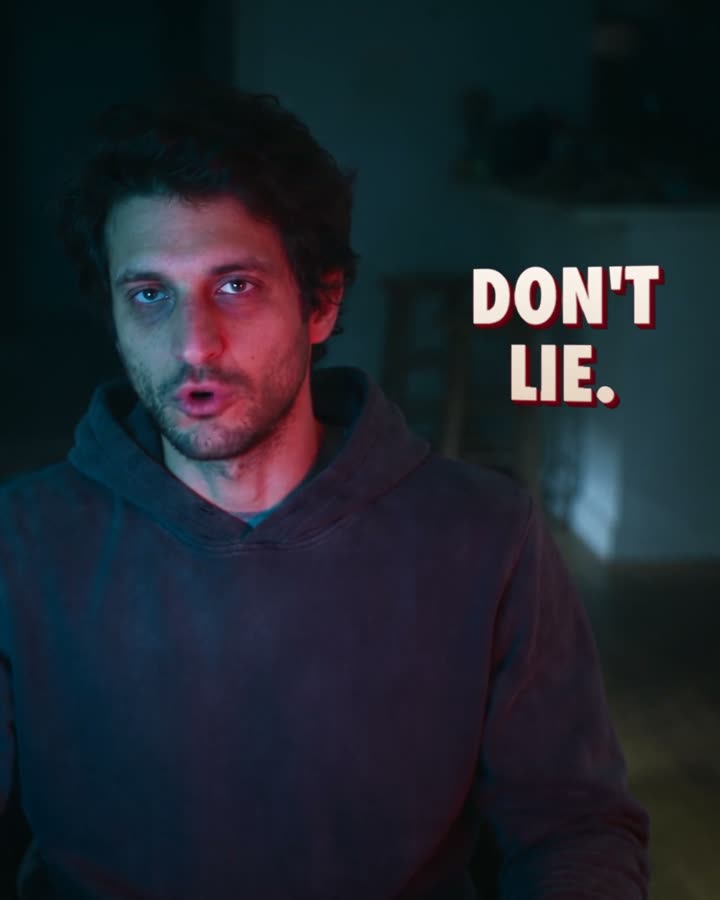
The 4:5 version isn't a centre crop. A second build script renders a clean 16:9 plate without cards or titles, then crops each shot on its own and switches crop on the exact cut frame. The one-take on the sofa is keyframed to follow him. "DON'T LIE." moves over his shoulder. The call becomes a floating window over a blurred copy of itself.
The subtitles are timed from a Whisper transcript, then every cue was checked against the measured speech, so each one appears just before the words and holds just after. In 16:9 they sit in the lower letterbox bar, off the picture.
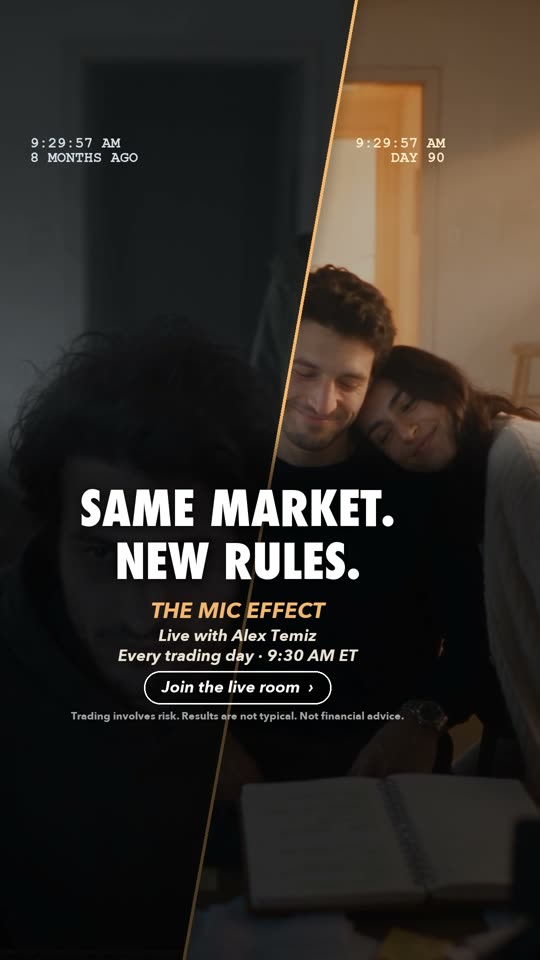
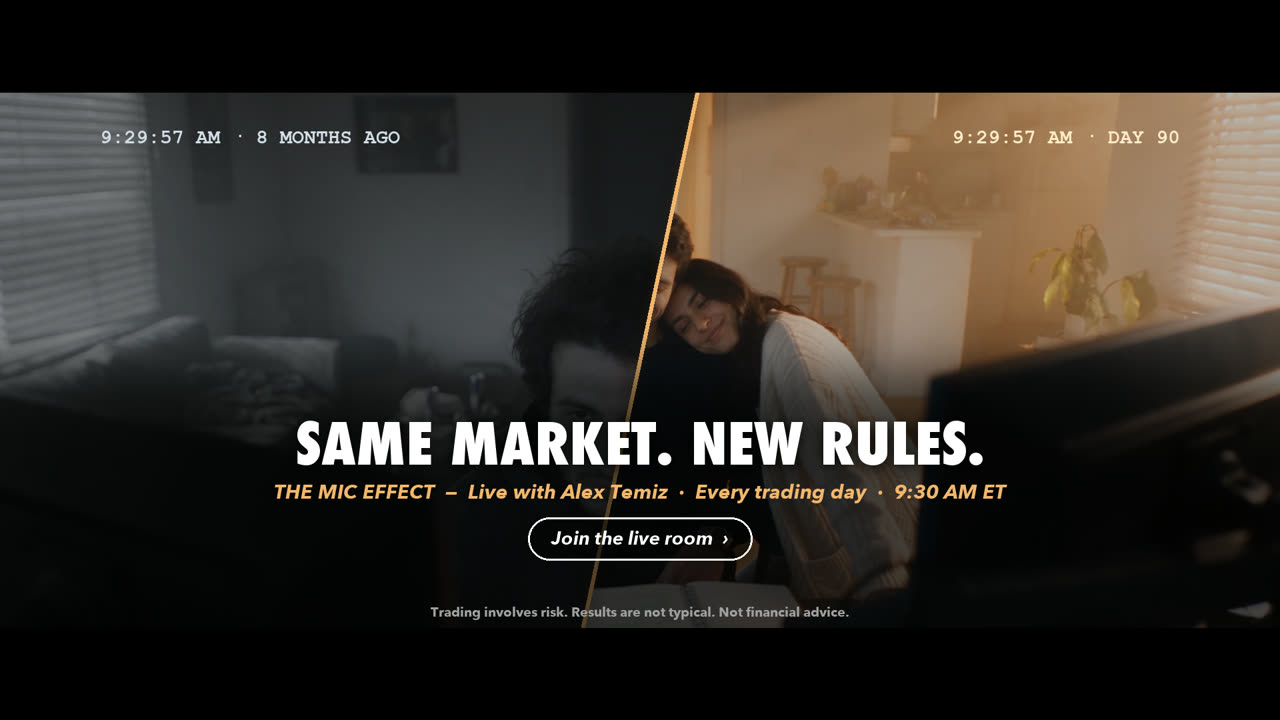
Same market. New rules.
The end card splits the screen between the two 9:29:57s: the cold one eight months earlier and the warm one on day 90. Then the line, the 9:30 AM ET session time, a button to join the live room, and the risk disclaimer. Marco gets the last word: "That's the MIC effect."
Forty seconds, three shapes
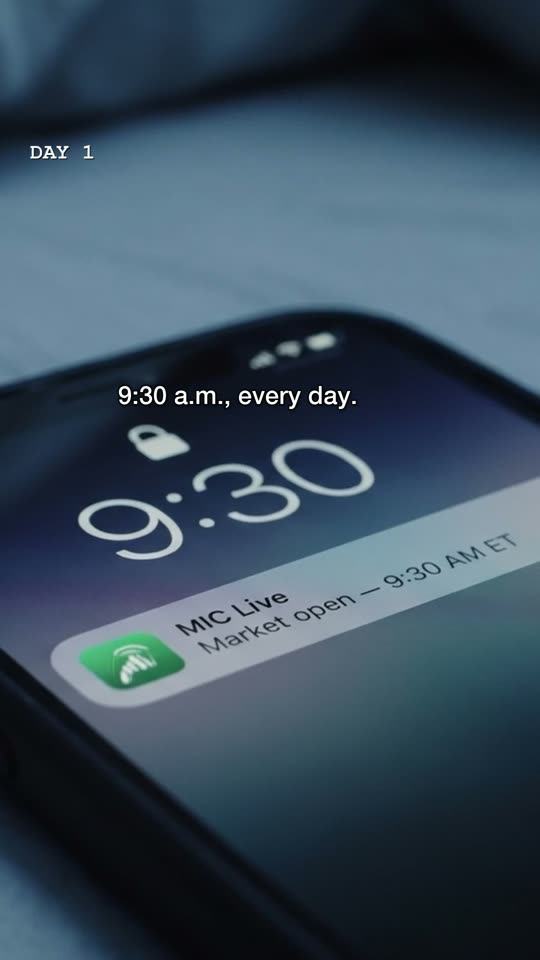
The film also needed a short version for paid placements. The first cutdown ran 30 seconds: the hook, the spiral, the fight, the switch, 9:30 and the mirror ending, each joined on a camera cut that already existed in the film. It played well, but Alex was barely in it. The 40-second version makes room for the real live call. The voice-over line "Live, with someone who actually trades" now lands on the moment the call opens, and then Alex is trading in his own voice.
It ships in 16:9, 4:5 and 9:16. The vertical cut follows the YouTube Shorts layout: every word stays inside the safe area, clear of the top bar, the like and share buttons and the title at the bottom. The subtitles sit under the chin and move per shot, above the phone on the 9:30 lock screen so the notification stays readable. The end card was rebuilt for the tall frame.