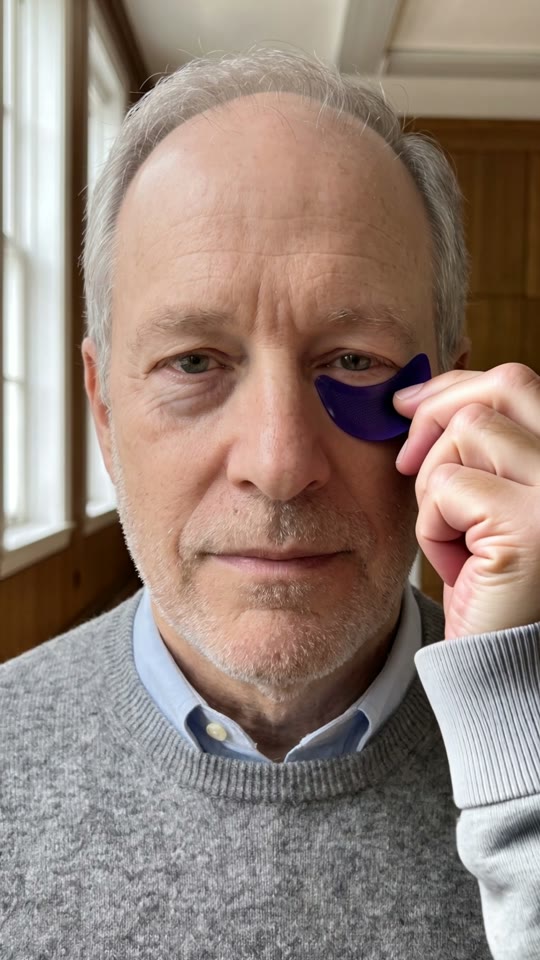
OROS spec ad: eye bags that look real, not punched
A 70-second seminar ad for OROS microneedle eye patches, aimed at men over 50. A presenter explains why creams sit on top of the skin, calls Frank up from the audience, and puts one patch on his left eye so the room can compare.
- LENGTH
- 70 seconds, 9:16, plus two alternative openings
- BRAND
- OROS, microneedle under-eye patches for men (spec ad)
- CAST
- A presenter with perfect skin, Frank with real eye bags, a room of men over 50
- TOOLS
- Nano Banana Pro for every still, Seedance 2.5 for the seminar and dialogue shots, Kling 3.0 Pro for Frank's close-ups between locked stills, ElevenLabs for the voice, music from Artlist, finished in Premiere Pro
- VERSIONS
- Ten rough cuts
Real eye bags, not a black eye
The reference was a seminar ad for women: a host, a flip chart, a volunteer from the audience and a product applied live. This version keeps the script and the seminar, and moves everything to men over 50.
The brief had one line in capitals: realistic eye bags, not purple ones that look like a punch. That line ended up shaping most of the work.
A lecture, a volunteer, a test
The script runs like a short lecture: a paper, a drawing of skin layers on the flip chart, why most creams stay on the surface, then the live test on Frank and three questions for the viewer to ask about their own eye cream.
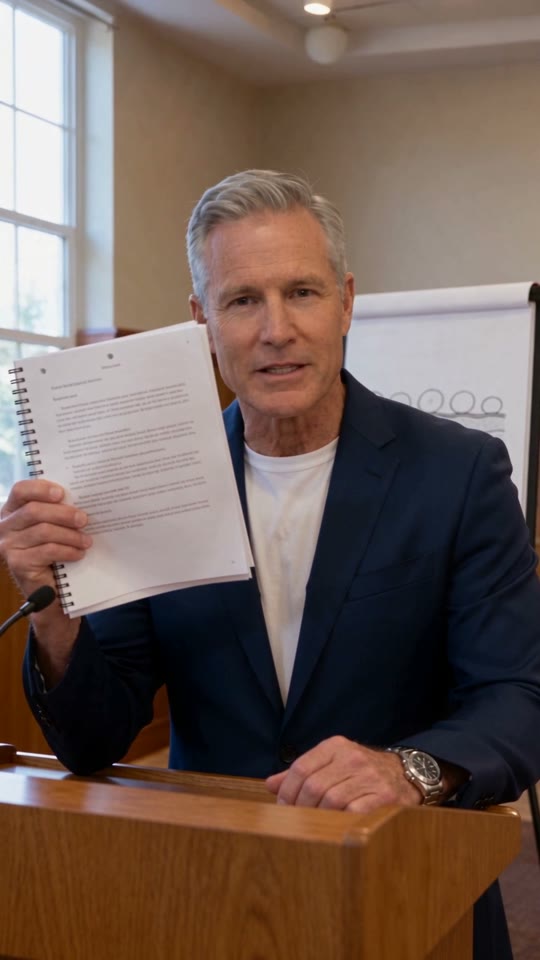
The paper
This paper just explained 20 years of tired look in 20 seconds.
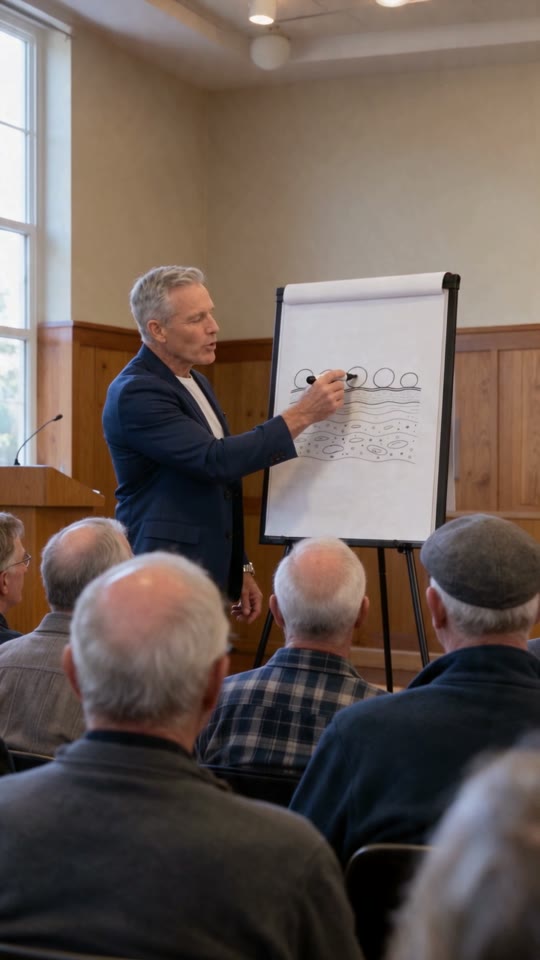
The flip chart
Men's skin is 20 to 25% thicker than a woman's.
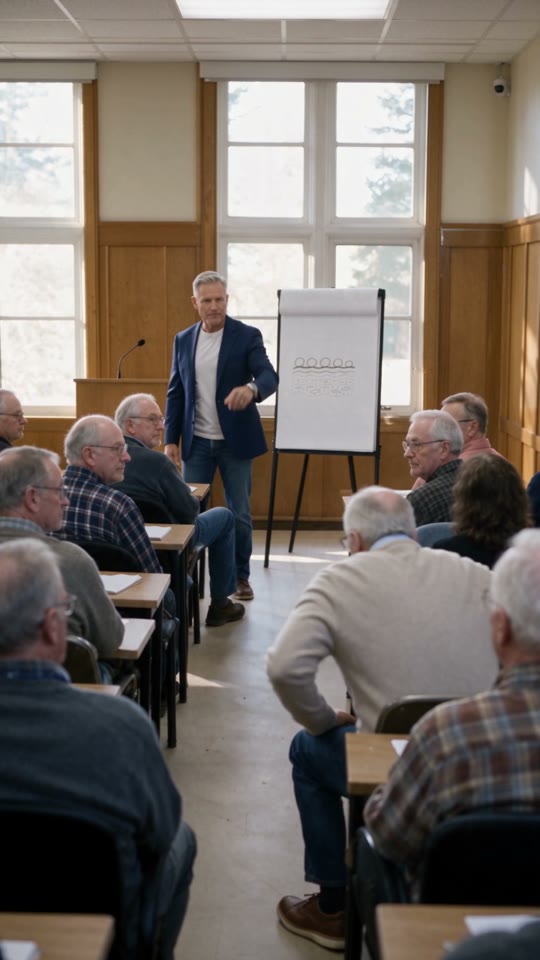
The room
Frank, come here. Let's show them.
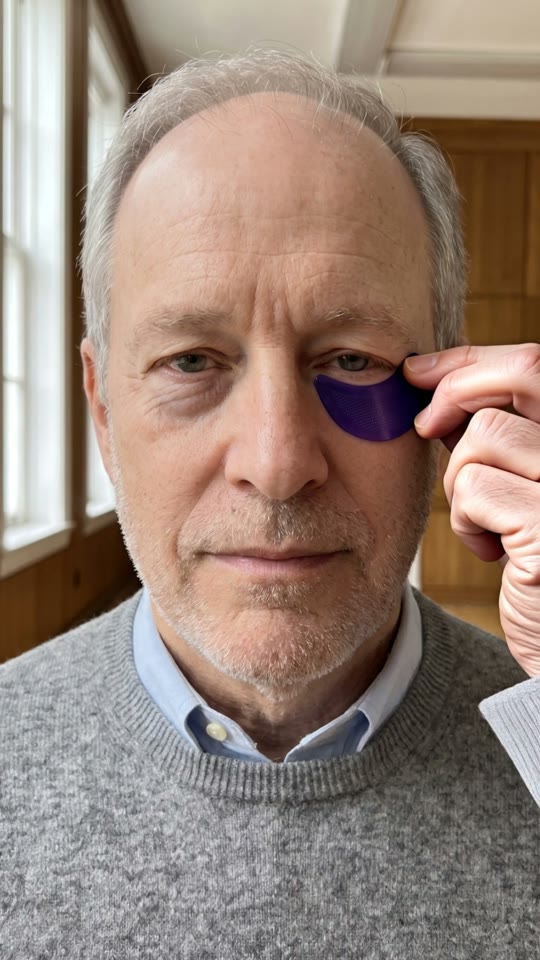
Press it on
That's 1,500 microneedles going in.
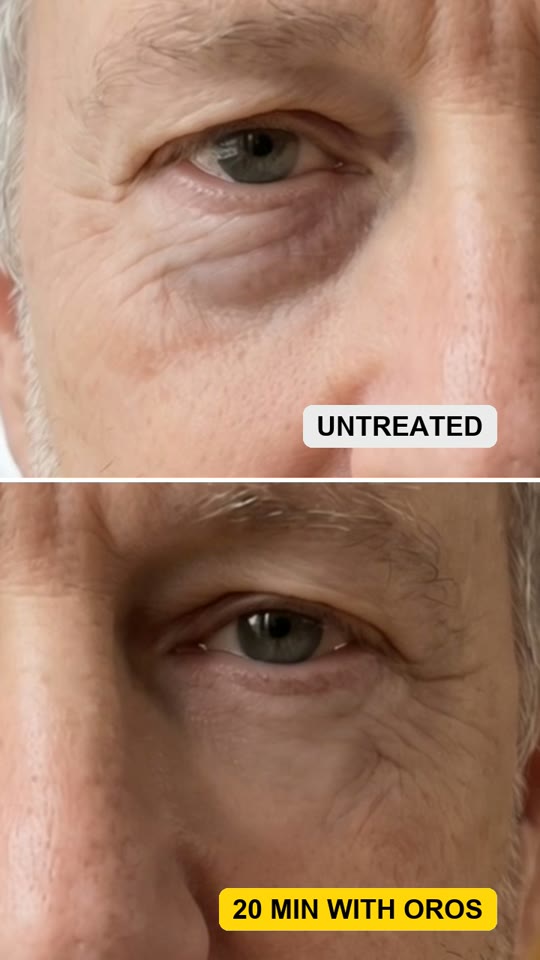
Proof split
The puffiness. Already going down.
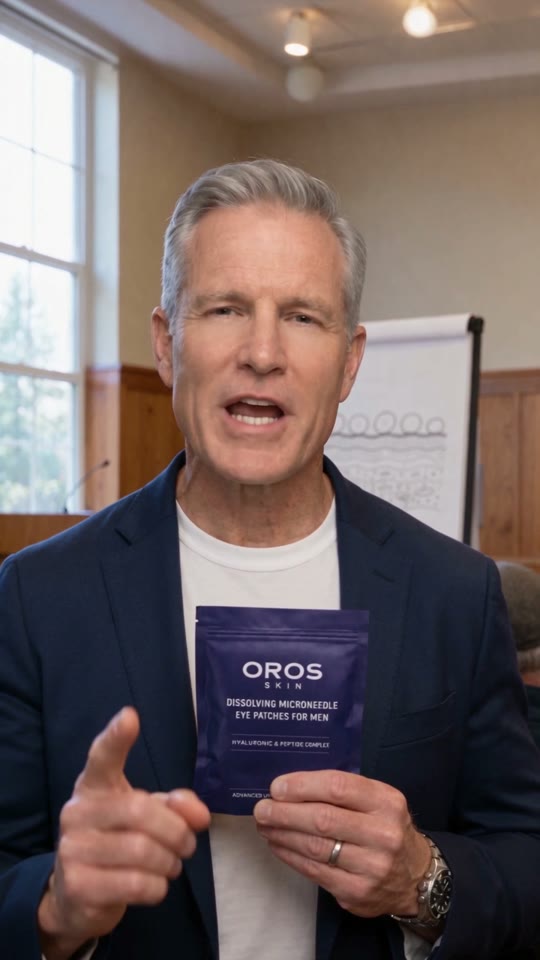
Three questions
If not… consider changing to this.
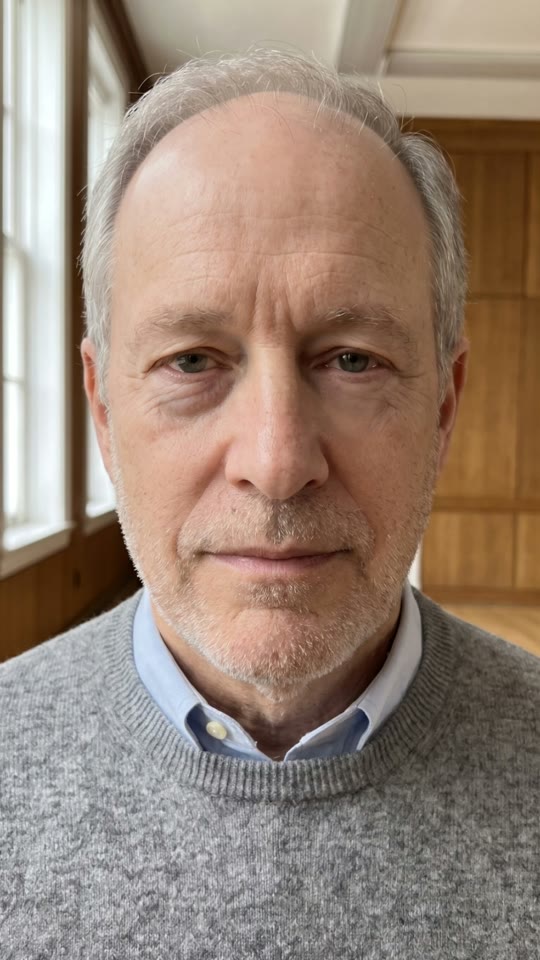
He looked like he'd been in a fight
The first close-up of Frank was made the usual way: a still of him, plus a prompt that described his under-eyes. The video model read "darker under the eyes" and kept going. A soft grey shadow became a bruise, and Frank looked like he had been punched, the exact thing the brief said to avoid.
The lesson: never describe skin colour to a video model. Put the look in a still that has already been approved, and give the model nothing to exaggerate.
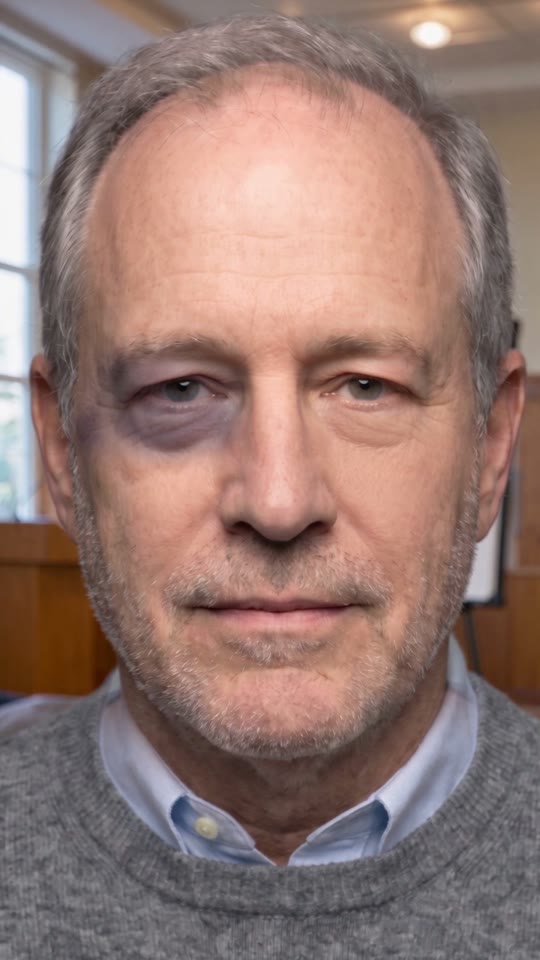
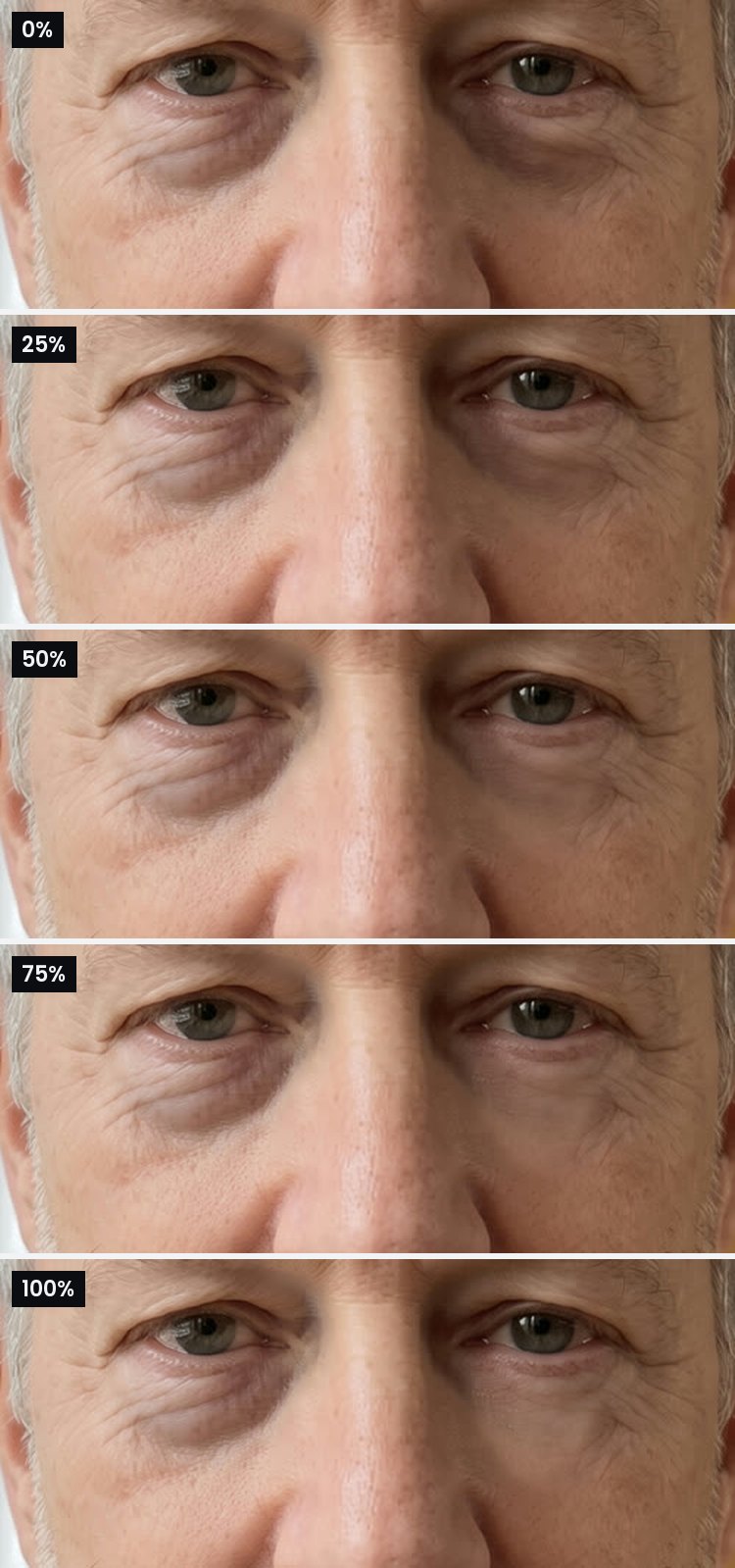
Five stills, one eye changing
The before/after is built as stills first. One approved photo of Frank is the base. An image edit makes a version where only his left under-eye is smooth. That edit is lined up with the base using face landmarks, and only a soft-edged area under that one eye is blended in at 0, 25, 50, 75 and 100%. Every other pixel stays identical, so his right eye, skin and stubble never change.
Each close-up then starts and ends on one of those stills, animated in Kling 3.0 Pro with a start and an end frame. The shot that has to show 20 minutes passing runs from 0% to 75%, the proof split uses 0% and 100%, and the cuts between shots always land on the same stage.
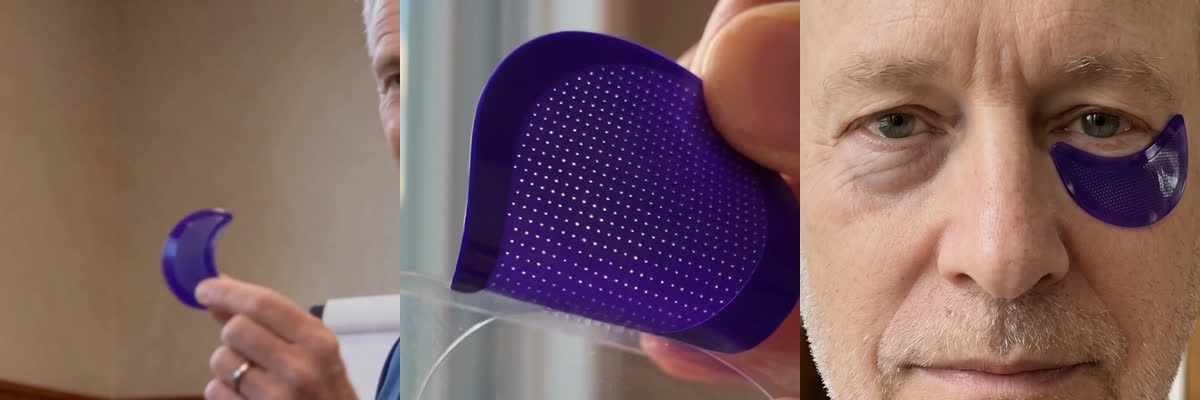
The same patch in every shot
The patch shows up three ways: held up by the presenter, peeled off its film in macro, and on Frank's face. The first versions on the face came out too small, the wrong texture, or a different product from the one in his hand.
The fix was one master patch. An image edit used the macro frame as its reference, and only the patch itself, picked out by its purple, was composited onto the locked still of Frank. Same shape, same size on the face, same dot pattern. Frank also presses, peels and swipes with his own hand, because another person's hand changes from shot to shot.
What changed between versions
Ten rough cuts were reviewed on a timeline with notes pinned to exact frames. These are the notes that changed the most.
Every word, on one line
The captions use the script, not a transcript. A transcript only supplies the timing, and every word is matched back to the original line, so nothing is misheard or dropped. Lines break at natural phrases ("thicker than a woman's" stays together), never after "a", "the" or "than". Each caption starts and ends on a real pause in the voice, measured from the audio.
The final timing and zooms were done in Premiere Pro, so the captions, music and room tone were rebuilt from that timeline to stay in sync. The voice sits in a small-hall reverb with the room tone underneath. The music is "Flow" by PlayerZero from Artlist, ducked under every line and timed to end with the ad. The mix is set to −14 LUFS.
Three ways in
The ad comes with three openings on the same body: the presenter and his paper, the before/after proof split first, or Frank peeling the patch off his face. The first two seconds decide whether anyone stays, so each one gets tested.